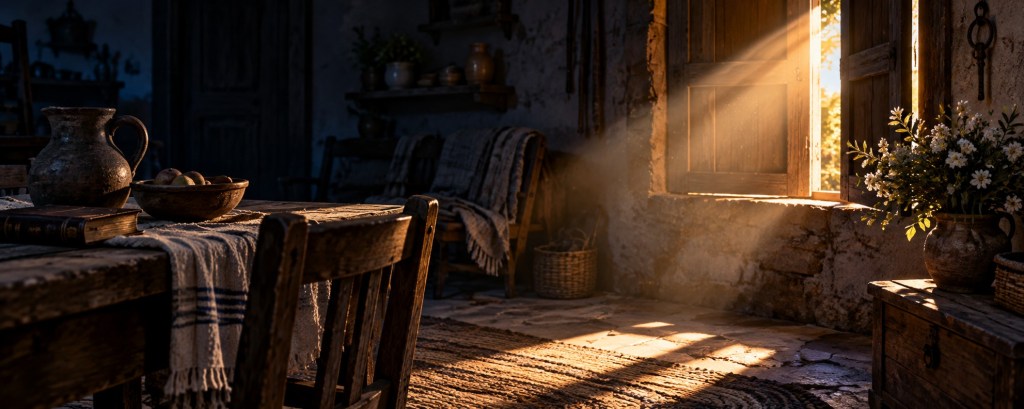
Scripture Focus: “The people that walked in darkness have seen a great light: they that dwell in the land of the shadow of death, upon them hath the light shined.” — Isaiah 9:2
There is a difference between walking through a dark place and living in one.
If the electricity goes out for twenty minutes, most of us can manage. We find a flashlight, complain after walking into something that has occupied the exact same spot for fifteen years, and wait for the lights to come back on. But let the darkness remain long enough and something changes. Our eyes adjust. We learn where the furniture is. Eventually, we stop reaching for the switch.
I think that is part of what makes the language of Isaiah 9 so powerful.
Isaiah was writing during a frightening time in Israel’s history. Enemy armies threatened the land, and the northern territories of Zebulun and Naphtali—the area that would later be known as Galilee—had suffered terribly. Isaiah 8 closes with “trouble,” “darkness,” and “anguish” (Isaiah 8:22). Then chapter 9 opens with people not only walking in darkness, but dwelling “in the land of the shadow of death” (Isaiah 9:2).
That word dwelling catches my attention.
Psalm 23 speaks of “the valley of the shadow of death,” but David is walking through it (Psalm 23:4). Isaiah gives us a picture of people who have been surrounded by darkness so long that it has become the landscape of everyday life.
And then—light.
“Upon them hath the light shined.”
I love that Isaiah does not picture these people clawing their way out of the darkness, inch by painful inch, until they finally reach the light. The Light comes to them.
Centuries later, Matthew reaches back to this very prophecy when Jesus begins His ministry in Galilee (Matthew 4:12–17). Suddenly those old names—Zebulun and Naphtali—matter again. The very region that had known invasion, humiliation, and loss became the place where Jesus walked the roads, entered homes, healed the sick, called disciples, and proclaimed, “Repent: for the kingdom of heaven is at hand” (Matthew 4:17).
The Light Isaiah had seen coming was Christ.
There is something beautiful about that to me. God did not simply erase Galilee’s painful history. He entered it. The place once remembered for darkness became the place where the Light of the world began openly announcing His kingdom.
And Isaiah was not finished.
Sorrow gives way to joy. The yoke is broken. The rod of the oppressor is shattered. Even the boots and garments of battle are destined for the fire (Isaiah 9:3–5). Isaiah was looking far beyond the trouble immediately surrounding him to a day when darkness itself would lose its claim.
We have seen the beginning of that victory. At Calvary, Christ “spoiled principalities and powers” and triumphed over them (Colossians 2:15). The tomb could not hold Him. Satan could not defeat Him. Death could not keep Him.
And yet, here we are.
We still bury people we love. We still know sickness, injustice, temptation, disappointment, and prayers that seem to wait far longer than we thought they would. There are days when the darkness does not feel very defeated.
I think Scripture makes room for us to say that.
Faith does not require us to call darkness light. It asks us to remember that darkness does not get the last word.
Maybe that is why Isaiah 9 means even more to me when I read it alongside the promise of Christ’s return. The victory Jesus secured at Calvary is moving toward a day when nothing remains unfinished. Death will not merely become easier to bear; “the last enemy that shall be destroyed is death” (1 Corinthians 15:26). Sin will not simply become more manageable; it will be gone. And sorrow will not merely visit less often, because “God shall wipe away all tears from their eyes” (Revelation 21:4).
We have lived in this broken world so long that, in some ways, our eyes have adjusted to the dark.
We expect hospitals and cemeteries. We expect bad news. We expect goodbyes. We expect temptation to be part of the struggle and grief to be part of loving people. We have learned where the furniture is.
But we were never meant to mistake familiarity for permanence.
That may be what I love most about Isaiah’s words. He reminds me to look beyond what my eyes have grown accustomed to seeing.
“The people that walked in darkness have seen a great light.”
The Light has already come.
And He is coming again.
One day we will not need to learn how to live with the darkness anymore. There will be no darkness left to adjust to—and no shadow left for the redeemed to call home.
If this Fireside Chat warmed your spirit and sparked fresh resolve to live what you believe, fan that flame with Scripture—“Let the word of Christ dwell in you richly” (Colossians 3:16). Pull a little closer to the Light, and carry it into the week ahead.
👉 Sign up for the free FAST Crash Course in Bible Memorization: http://fast.st/cc/21419
 Star for the Journey
Leave a comment